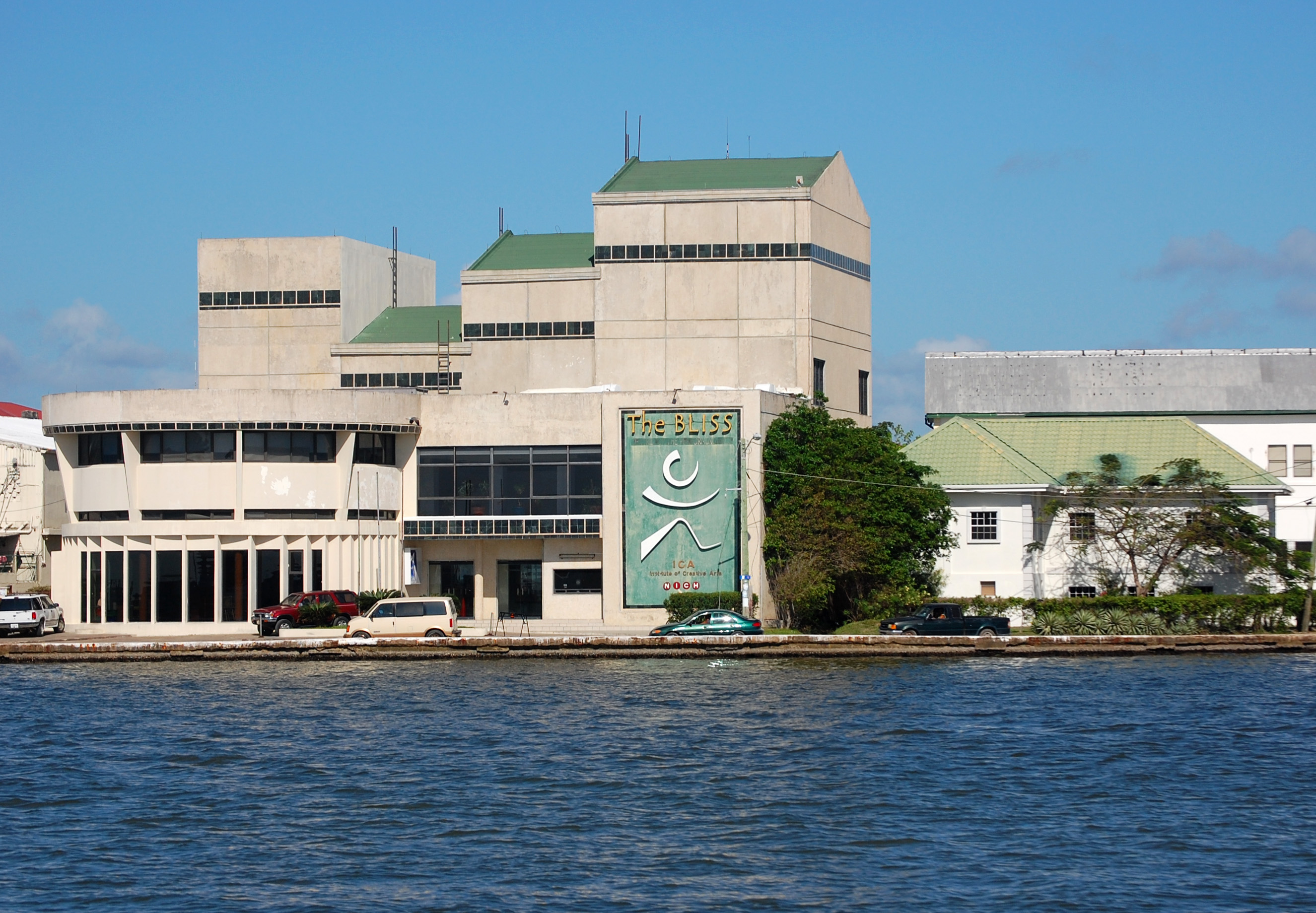
The Bliss Institute, now widely known as the Bliss Centre for the Performing Arts, is a cultural institution situated along the waterfront in Belize City. Established through the philanthropic legacy of Henry Edward Ernest Victor Bliss, the building reflects the enduring influence of the Baron Bliss Trust, which has played a foundational role in supporting education and the arts in Belize. Conceived as a multipurpose cultural facility, the Institute originally integrated a public library, reading rooms, exhibition galleries, and a large auditorium, thereby embodying a mid-twentieth-century vision of civic cultural development within a newly emerging national context.
Construction of the Bliss Institute commenced in 1953 and was completed in 1954, financed primarily through allocations from the Baron Bliss Trust, totaling approximately $251,829 for construction and an additional $7,532 for furnishings. Architecturally, the building was designed in a modernist international style, notable for its clean lines and functionalist approach, which distinguished it from the prevailing colonial-era structures in Belize City. One of its most distinctive features—the auditorium gallery shaped to resemble the prow of a ship—symbolically reflects the maritime character of the city and its historical orientation toward the Caribbean Sea.
In 2003, the building underwent a comprehensive renovation led by a Mexican construction firm, resulting in its transformation into the Bliss Centre for the Performing Arts. This redevelopment modernized the facility’s technical capabilities and reaffirmed its role as the national hub for performing arts. The Centre now houses the headquarters of the Institute of Creative Arts (ICA), the governmental body responsible for the promotion and coordination of artistic activity across Belize. As such, the Bliss Centre functions not only as a performance venue but also as an administrative and developmental center for the country’s cultural sector.
In addition to its role in the performing arts, the Bliss complex has historically incorporated museum functions, including the display of archaeological materials from major Maya sites such as Caracol. Although modest in scale, these exhibits contribute to broader efforts in cultural preservation and public education. Today, the Centre continues to host a wide range of activities, including theatrical productions, musical performances, national ceremonies, and public lectures, reinforcing its status as a central locus of cultural expression and civic engagement in Belize.
Sources: Institute of Creative Arts (ICA), Belize; Baron Bliss Trust records; Belize Tourism Board cultural overviews; Institute of Archaeology (Belize) publications on Caracol.