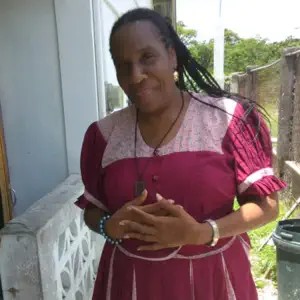
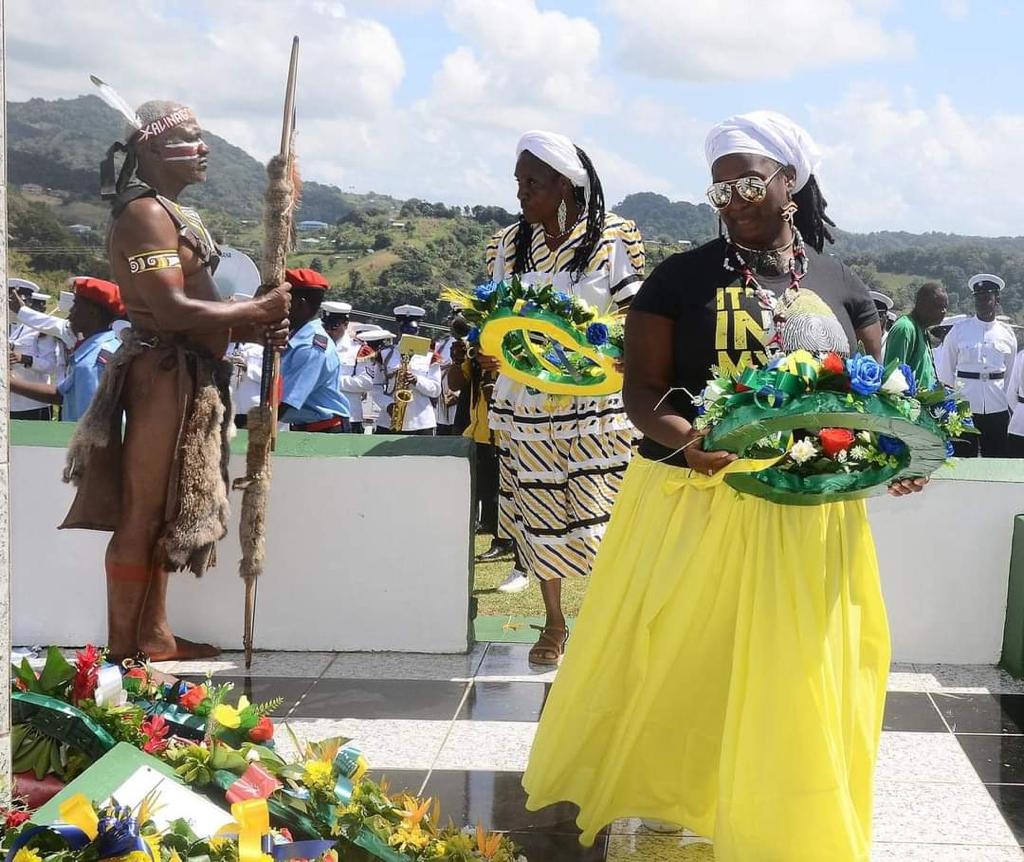
On January 16, 1953, Ambassador Cynthia Ellis-Topsey was born Nana Barouda Lubafu Isieni ('Powerful Spirit' in Garifuna) in Belize to Garifuna parents, Godsman Celestino Ellis and Ethel Bernadine Ellis, in the quiet Maya village of August Pine Ridge, near the northern border with Mexico. Hers was a birth that already carried the imprint of cultural confluence: she entered the world under the care of a Maya midwife, a moment that symbolically wove together the living traditions of Belize’s diverse peoples. From the beginning, her life stood at the intersection of Garifuna, Maya, and African diasporic histories.
Her ancestry reaches back to a remarkable lineage of cultural builders and educators. Among her forebears were individuals who worked alongside African-American women brought to Belize under the authority of the Catholic Church—women who, despite the violence of displacement and enslavement, became foundational figures in the creation of rural schools. Together, they nurtured early systems of education in remote communities, guiding Garifuna men and women into roles as teachers and missionaries among Maya populations. This legacy of service, resilience, and cross-cultural exchange formed the unseen architecture of Ellis-Topsey’s life: education not as institution alone, but as relationship, responsibility, and continuity.
At the age of twelve, her imagination turned skyward. She dreamed of becoming an astronaut, a vision that reflected not only childhood wonder but a deeper orientation toward boundlessness. That instinct—to move beyond imposed limits—mirrors the historical journey of the Garifuna people themselves, a diasporic culture shaped by displacement, adaptation, and endurance across coastlines and generations. In Ellis-Topsey, that spirit became conscious: a refusal to accept small horizons, paired with a commitment to carry her people’s story into wider worlds.
From an early age, she gravitated toward young people, not as subjects to be taught but as collaborators in an unfolding future. She has often emphasized that learning is reciprocal—that within every child lives a vision not yet articulated, a form of intelligence that must be met with respect rather than instruction alone. Her work reflects this philosophy: mentorship as dialogue, culture as something lived and renewed, not merely preserved.
This vision took physical form in the establishment of the Godsman Celestino Ellis Center for Garifuna Culture, named in honor of her father. The center stands not simply as a building, but as a living vessel of memory and possibility. It was conceived as a space where Garifuna language, music, foodways, and stories could be held, practiced, and reimagined across generations. Within its walls—and in the gatherings it inspires—the past is not static. It speaks, sings, and teaches, meeting the aspirations of the present.
Now as a mother of 5 children and 17 grandchildren to extend this history through, For Ellis-Topsey, the center is a kind of beacon. It does not impose knowledge; it invites encounter. It creates the conditions for a dialogue in which elders and youth, tradition and innovation, memory and imagination converge. In that space, culture is neither relic nor performance—it is a living continuum, carried forward through relationship, grounded in history, and open to the future.
****
“I was very honored to have a conversation with the students. It was very interactive … I feel like I owe it to the present generation, because they’re the ones that need to be cultivated in readiness in leading the country – they will be our lawyers, doctors, nurses, engineers, and so on –and they asked brilliant questions, and I try to think back of when I was their age, and some of the questions that I had, and what my journey has been, that could support them in their journey,” she said.
“… Black History Month should be every month, because we have a lot of delving into that goes into our healing, because we are a traumatized people at all levels, and because being Garifuna doesn’t distinguish us from other people, in the sense that, young people are hungry for information. I told them about Evan X Hyde and the impact he had on me when I was growing up, when he came back and made it his business to meet with us – young people – and shared with us a lot of information about Black Consciousness, and so I have benefited from that [and] have a responsibility to do the same,” she added.
- Cynthia Ellis Topsey with Amandala News Black History Month 2024
'Cynthia Ellis Topsey is Ambassador-at-Large for the Garifuna Nation in Belize and founder of The Godsman Celestino Ellis Center for Garifuna Culture (GCE-CFGC). As a community advocate, her lifelong mission centers around advocating for Garifuna sovereignty and land rights, both locally and globally. As the Ambassador at Large and Chief Executive Officer of The Indigenous Peoples Network, she tirelessly champions equality, especially in the realms of sustainability and environmental justice. Her research interests encompass a range of issues, from native agroecology practices to coastal adaptation. Cynthia Ellis Topsey served as a visiting research fellow at the Center for Coastal Climate Resilience in the spring of 2024.' https://climateresilience.ucsc.edu/
Cynthia Ellis Topsey Curriculum Vitae
Cynthia Ellis-Topsey Attends Garifuna Conference in St. Vincent: Love FM 2024
BHM: Cynthia Ellis-Topsey, Amandala News 2024
Cynthia Ellis-Topsey establishing national network for Garifuna youth: Amandala News
The Real Stuff Podcast: Cynthia Ellis-Topsey (Lubafu Iseini) is a community Leader & advocate in Belize.