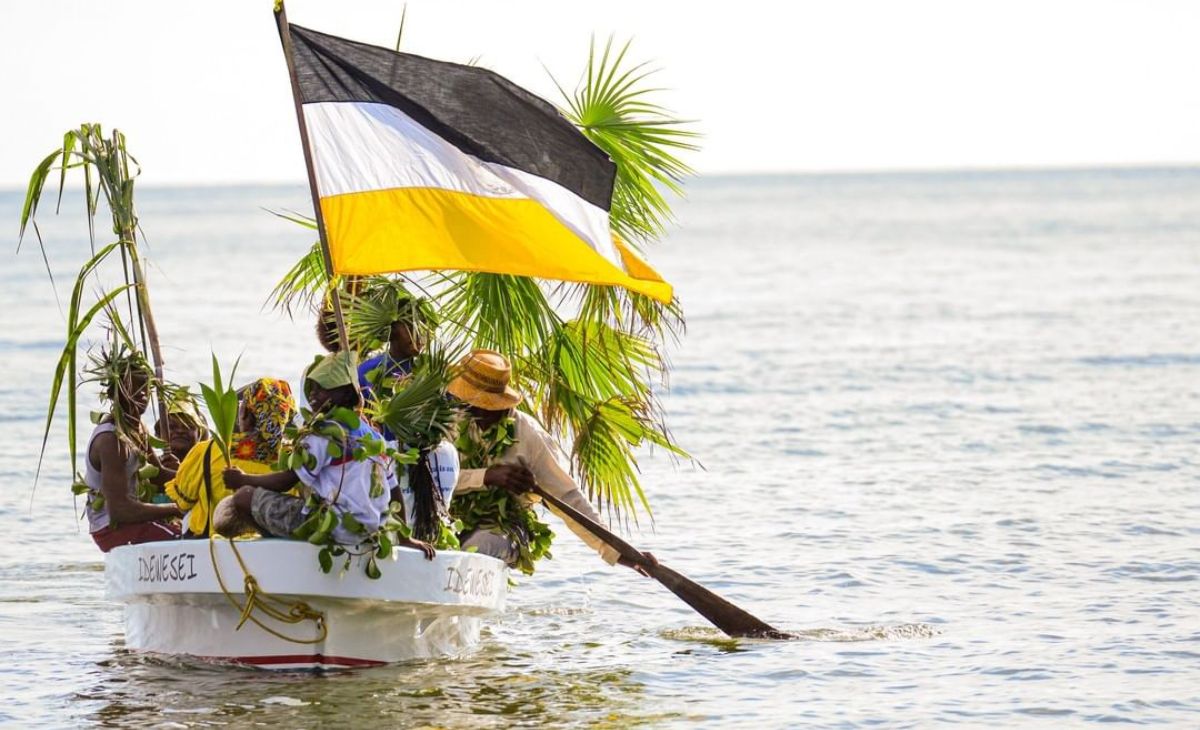
The Garifuna (Garinagu) are an Afro-Indigenous people whose history links West Africa, the island of Saint Vincent, and the Caribbean coasts of Central America. They emerged from the blending of African survivors of shipwrecks and escaped enslaved people with the Indigenous Kalinago (Carib–Arawak) population of Saint Vincent in the seventeenth century, forming a distinct society outside the plantation system.
Following defeat by the British after the Second Carib War, more than 5,000 Garifuna were forcibly exiled in 1797 to the island of Roatán, off the coast of present-day Honduras. From there, they migrated along the Central American Caribbean coast, eventually establishing communities in Belize, Guatemala, and Nicaragua.
Settlement and Society in Belize
In Belize, the first major Garifuna settlement was established at Dangriga (formerly Stann Creek), which remains the cultural capital of the Garifuna people. Today, significant communities also exist in Hopkins, Seine Bight, Punta Gorda, Barranco, and Belize City.
Garifuna communities traditionally relied on a mixed subsistence economy of agriculture, especially cassava cultivation (primarily done by women). Fishing and coastal trade are primarily but not exclusively done by men. Garifuna communities have a vibrant and thriving circle of art practitioners creating artisan crafts as small scale local commerce, which can be found at businesses such as GariMaya in Hopkins.
Over time, wage labor expanded to include logging in Belize’s mahogany camps, maritime work, and migration to banana enclaves and later to the United States. Remittances from abroad continue to play a major role in household economies.
In urban areas, Garifuna life overlaps significantly with Belize’s Creole population, with many individuals engaged in professional, technical, and administrative occupations.
Culture and Identity
Garifuna culture is globally recognized for its resilience and richness. The Garifuna language, music, and dance—particularly drumming traditions and rituals tied to ancestry—were proclaimed a Masterpiece of the Oral and Intangible Heritage of Humanity by UNESCO in 2001.
Despite pressures of migration and due to resisting cultural assimilation, Garifuna communities in Belize have preserved their distinct language (Arawakan-based with African and European influences). In addition Ritual practices centered on ancestors and community have also been maintained. The culinary traditions of preparing dishes such as cassava bread, hudut and dasara continue and draw people from around the world to both eat and learn to cook themselves.
Historical Continuity and Migration
Garifuna history is marked by repeated displacement and adaptation. After their initial exile from Saint Vincent, further migrations occurred in the nineteenth century due to political conflicts in Honduras and regional instability. These movements contributed to the spread of Garifuna communities along the Central American coast, including Belize.
The Garifuna maintained a strong maritime orientation, traveling and trading along the coast, which helped sustain cultural cohesion across national borders.
Garifuna in Belize Today
Garifuna identity remains a vital part of Belize’s multicultural society. The national holiday Garifuna Settlement Day (November 19) commemorates their arrival and is marked by reenactments, music, dance, and traditional foods across the country. Belizean Garifuna have played a leading role in regional scholarship, cultural advocacy, and the organization of Garifuna communities across Central America and the diaspora.
References
- National Garifuna Council of Belize
- National Institute of Culture and History (NICH Belize)
- UNESCO — Garifuna Language, Dance and Music (Intangible Heritage listing)
- Encyclopedia Britannica — “Garifuna”
- Nancie L. Gonzalez — Sojourners of the Caribbean: Ethnogenesis and Ethnohistory of the Garifuna