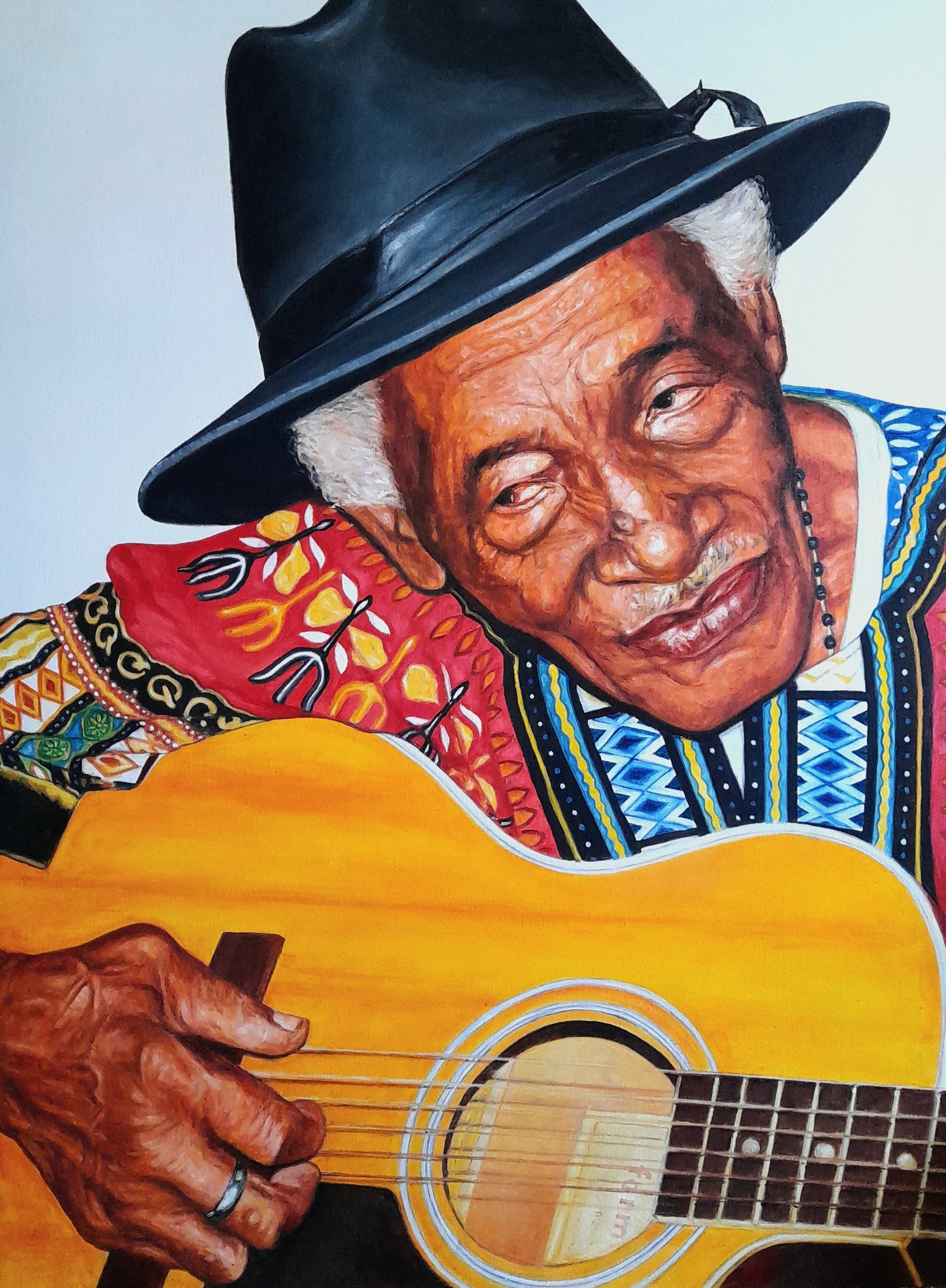
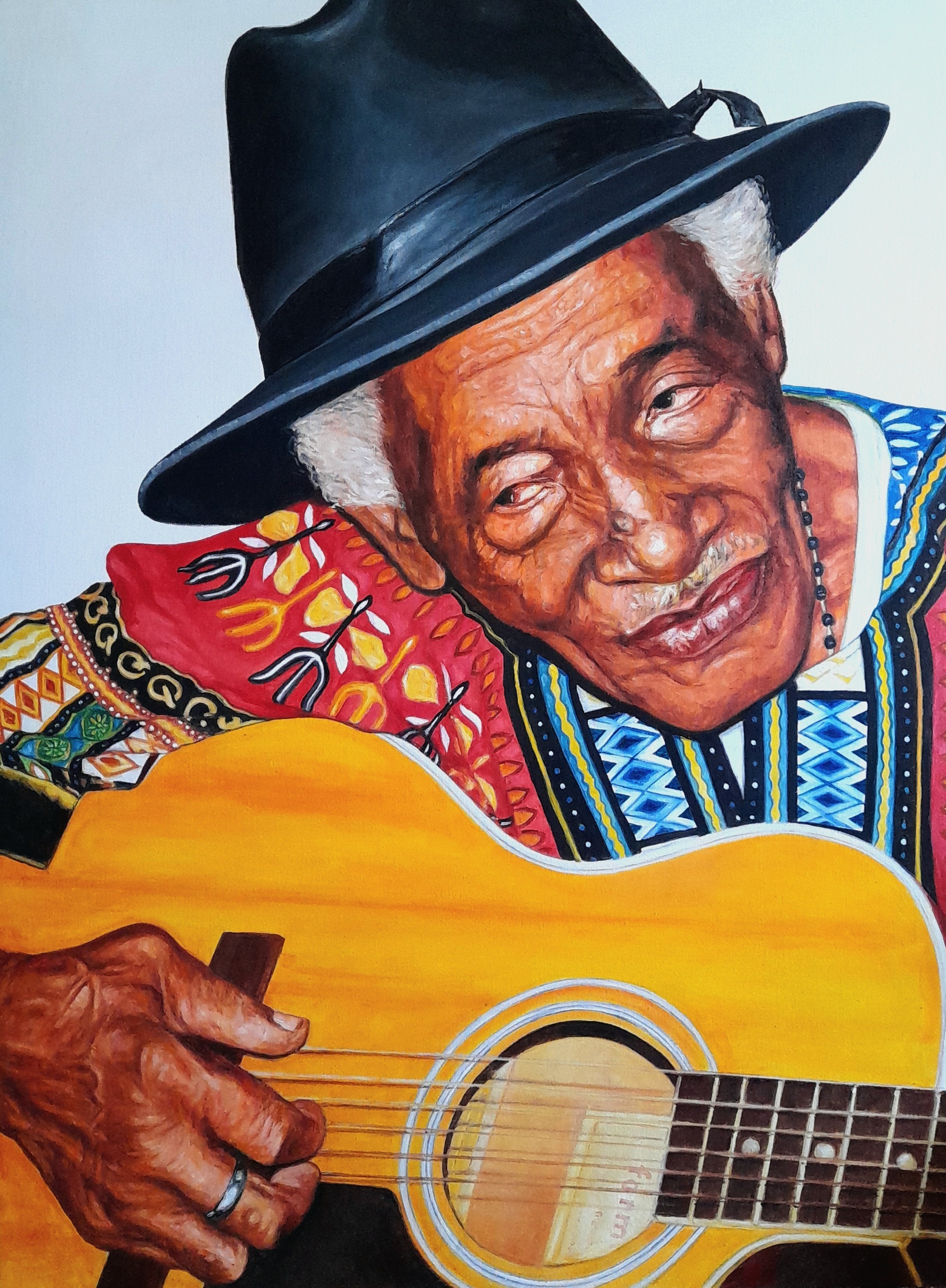
Paul Nabor, born Alfonso Palacio on January 26, 1928, in Dangriga, Belize, was one of the last great masters of paranda, the guitar-driven Garifuna song tradition. He spent nearly his entire life in Punta Gorda, a coastal town in southern Belize, where he became both a revered cultural figure and a spiritual leader.
According to Belize Living Heritage:
'most Belizeans knew him as Paul Nabor or ‘Nabi’. As a young man he worked in the banana plantation, he also worked in mahogany camp and as a chiclero.
Paul is best known for popularizing the traditional style of Garifuna music known as Paranda. By age 18 Nabi had begun singing and composing his own songs and hence began his emergence as a parandero musician. At a young age he traveled to Central America, but once he emerged as a popular musician he was able to travel and perform in the Caribbean, North America and Europe. It was not until his early 70’s that Paul Nabor’s music was brought to the forefront of Belizean music and international landscape. In 2004 he was bestowed with the honorable title of Distinguished Guest, during a visit to Tegucigalpa, Honduras.'
Nabor was a parandero—a singer, songwriter, and guitarist rooted in the Garifuna oral tradition. Paranda blends West African rhythmic sensibilities with Indigenous Caribbean and Latin influences, typically featuring acoustic guitar, call-and-response vocals, and themes of love, loss, exile, and spirituality. Historically performed by elder Garifuna men, the style was in decline by the late twentieth century, making Nabor’s role especially significant.
Beyond music, Nabor served as a buyei, or Garifuna spiritual healer and medium. In this role he led ceremonies, preserved ancestral practices, and maintained a temple he built in Punta Gorda for community ritual and healing. His life exemplified the inseparability of music and spirituality within Garifuna culture.
Revival and International Recognition
In the early 2000s, Belizean musician and cultural activist Andy Palacio helped bring renewed attention to elder Garifuna artists. Through Palacio, producer Ivan Duran of Stonetree Records encountered Nabor and recorded him for the landmark album Paranda (2005).
That album gathered veteran paranderos from Belize, Honduras, and Guatemala—many in their 60s, 70s, 80s, and even 90s—capturing an endangered musical lineage with remarkable intimacy. Nabor’s contributions stood out for their emotional depth and authenticity, including songs such as “Naguya Nei,” a poignant meditation on longing and separation that became one of the defining recordings of modern Garifuna music.
The success of Paranda helped spark a broader Garifuna cultural revival and laid groundwork for the international acclaim that followed Palacio’s own album Watina (2007). Together, these recordings elevated Garifuna music onto global stages and reinforced its recognition as an essential Afro-Indigenous Caribbean tradition. (Garifuna language, music, and dance were proclaimed a Masterpiece of the Oral and Intangible Heritage of Humanity by UNESCO in 2001.)
Legacy
Paul Nabor continued performing into his 80s, representing Belize at festivals and cultural events abroad. In 2013, he was awarded the Order of Distinction (Officer Class) by the Government of Belize for his contributions to music and culture.
He passed away on October 19, 2014, at age 86. His life’s work preserved not only a musical genre but also a spiritual worldview grounded in ancestral continuity. Through his recordings and mentorship, paranda remains a living tradition rather than a museum artifact.
Sources
- Belize Living Heritage
- Stonetree Records, liner notes and background on Paranda (2005).
- Government of Belize, Order of Distinction awards (2013).
- UNESCO, Proclamation of the Garifuna language, music and dance as Intangible Cultural Heritage (2001).
- Interviews and features on Paul Nabor in Belizean press and ethnomusicology publications.
- PBS